Corn Cob Charcoal Machine
Capacity
300-4500 kg/h
Heat Source
Diesel/Gas/Etc.
Customized
Yes

Capacity
300-4500 kg/h
Heat Source
Diesel/Gas/Etc.
Customized
Yes
Corn cob charcoal machine is an equipment that uses corn cob as raw material and produces charcoal through pyrolysis technology. Corn cobs are agricultural waste that is usually burned or discarded, causing serious environmental and resource waste. By using corncob charcoal machines, these wastes can be effectively utilized and converted into high-value energy products.
Features of corn cob charcoal machine:
Environmental protection: The corn cob charcoal machine uses corn cobs, a renewable raw material. It does not produce toxic and harmful gases during the production process and is environmentally friendly.
Efficient: Using advanced pyrolysis technology, corn cobs can be converted into high-quality charcoal in a short time, with high production efficiency.
Energy saving: The equipment has an energy recycling system to effectively reduce energy consumption.
Easy to operate: The corncob charcoal machine is easy to operate and maintain, and is suitable for all types of users.
Carbonization equipment which can carbonize coconut shell, walnut shell, apricot shell, hemp pole, sawdust, sawdust, rice husk, bamboo, eucalyptus, mushroom residue, medicine residue, furfural residue, coffee residue, palm shell, peanut shell and sunflower seed shell in the carbonization machine under high temperature conditions. Raw materials are heated in a carbonization furnace under oxygen‑limited conditions. The organic matter undergoes pyrolysis, removing volatile components, and finally forming solid biomass charcoal. The carbonization temperature and holding time directly affect the quality of finished charcoal. The charcoal powder is mixed with an appropriate amount of binder, and extruded by a briquette machine under high pressure to form regular charcoal sticks or charcoal blocks. The density and molding rate of the finished product can be controlled by adjusting the pressure and feeding speed. Raw materials with high moisture content need to be dried first. The drying system removes free water in the material to ensure that the moisture is controlled within 8‑12%, which avoids cracking and poor molding during subsequent carbonization and briquetting processing.

Raw material
Crushed
Drying
Carbonization

Put the dried corn cobs (containing 6% to 12% moisture) into a carbonization furnace at a certain temperature, and first continue to dry out the moisture. As the temperature continues to rise, the volatile matter in the corn cobs begins to be released, which is the dry distillation process. Dry distillation must be carried out in a reducing gas and at a certain temperature, and there must be enough time. The dry distillation temperature of corn cobs is 600~1000℃, and the time is 40 to 60 minutes. After dry distillation, the corn cobs are left with fixed carbon, but the charcoal at this time is not dense and has low strength. In order to increase the strength and density of the charcoal, it must be kept warm for a period of time in a reducing atmosphere, that is, carbonization. The carbonization temperature should be below 600℃ and the time should be more than 30 minutes. The higher the temperature, the shorter the time. The carbonized corn cobs are discharged from the discharge port of the carbonization furnace and cooled quickly to prevent oxidation. The cooled corn cob charcoal can be packaged and stored after being dried (so that the moisture content does not exceed 5%).

| Model | Diameter(mm) | The drum length(m) | Carbon capacity(kg/h) | Drum speed(rpm) | Dimension(m) |
| DLTJ1010 | 1000 | 10 | 100-200 | 1.5-2.5 | 10.0*1.7*2.8 |
| DLTJ1210 | 1200 | 10 | 200-300 | 1.5-2.5 | 10.0*2.0*3.0 |
| DLTJ1410 | 1400 | 10 | 400-500 | 1.5-2.5 | 10.0*2.2*3.2 |
| DLTJ1612 | 1600 | 12 | 600-800 | 2.0-3.0 | 10.0*2.4*3.5 |
| DLTJ1912 | 1900 | 12 | 900-1100 | 2.0-3.0 | 12.0*2.8*3.8 |
| DLTJ2212 | 2200 | 12 | 1200-1500 | 2.0-3.0 | 12.0*3.2*4.2 |
| DLTJ2512 | 2500 | 12 | 1600-2000 | 2.0-3.0 | 12.0*3.5*4.5 |
| DLTJ3012 | 3000 | 12 | 2200-2600 | 2.0-3.0 | 12.0*4.0*5.0 |
| DLTJ3612 | 3600 | 12 | 3000-3800 | 2.0-3.0 | 12.0*4.6*5.6 |
Selling is not the end. True service has just begun.

We offer free exclusive customized production solutions with dedicated one-on-one technical support. Based on your specific needs, we provide professional layout planning and resolve all your concerns from the very beginning.
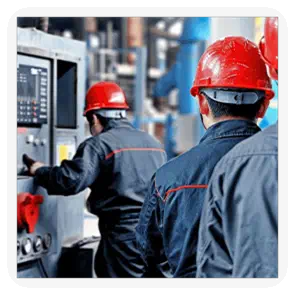
Our professional engineers arrive on-site to handle full equipment installation, commissioning, and debugging. We provide hands-on practical training and continuous guidance throughout the process, ensuring your equipment achieves rapid production ramp-up and runs smoothly and efficiently.
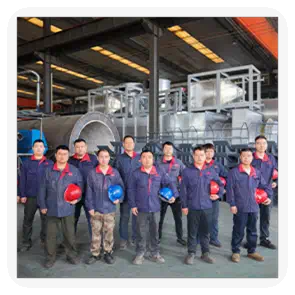
We provide a comprehensive one-stop after-sales service, including regular equipment inspections, daily maintenance, troubleshooting, and rapid response to any needs. Our goal is to ensure the long-term, stable, and efficient operation of your equipment.
Capable of carbonizing biomass with moisture content below 20% and particle size under 30mm, suitable for a wide range of common biomass types.
Produces high‑quality carbon with excellent carbonization rate. The resulting carbon products can be used not only as fuel, but also as raw materials for agricultural carbon, metallurgical carbon, and activated carbon.
Strong carbonization depth control capability. The residual volatile matter of the final charcoal can be precisely adjusted between 10‑25% according to different industrial requirements.
Enables adjustable carbonization depth and volatile content to meet varied industrial requirements while maintaining high carbonization efficiency.
From solution design to equipment manufacturing, and on-site installation and commissioning, we deliver comprehensive one-stop services. Our equipment has been successfully exported to over 100 countries and regions, including the UK, Russia, Malaysia, the Philippines, Italy, Israel, Indonesia, Ethiopia, Nigeria, Congo, South Africa, Pakistan, India, Egypt, and many others. We look forward to partnering with you. Below are the project site of our valued clients.